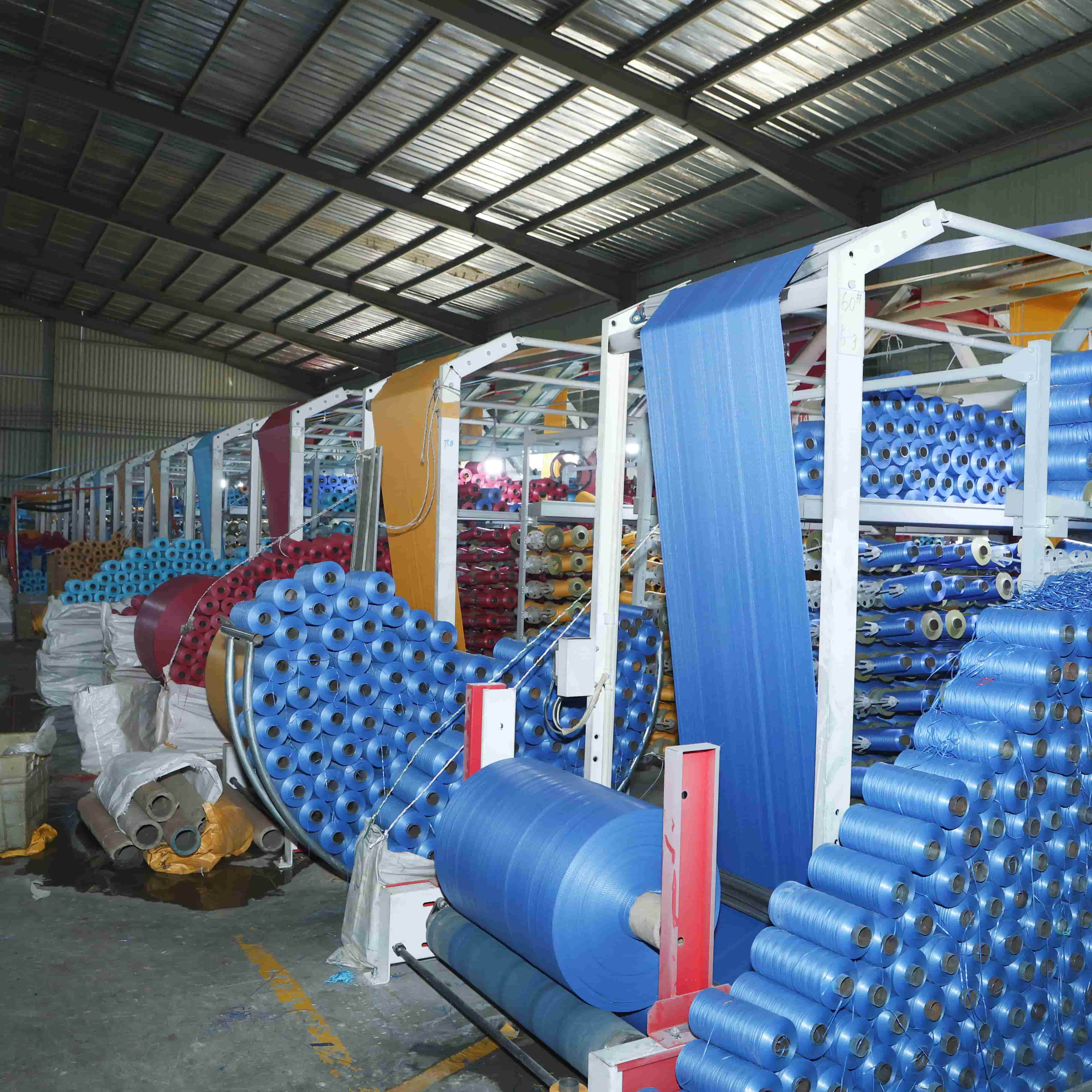
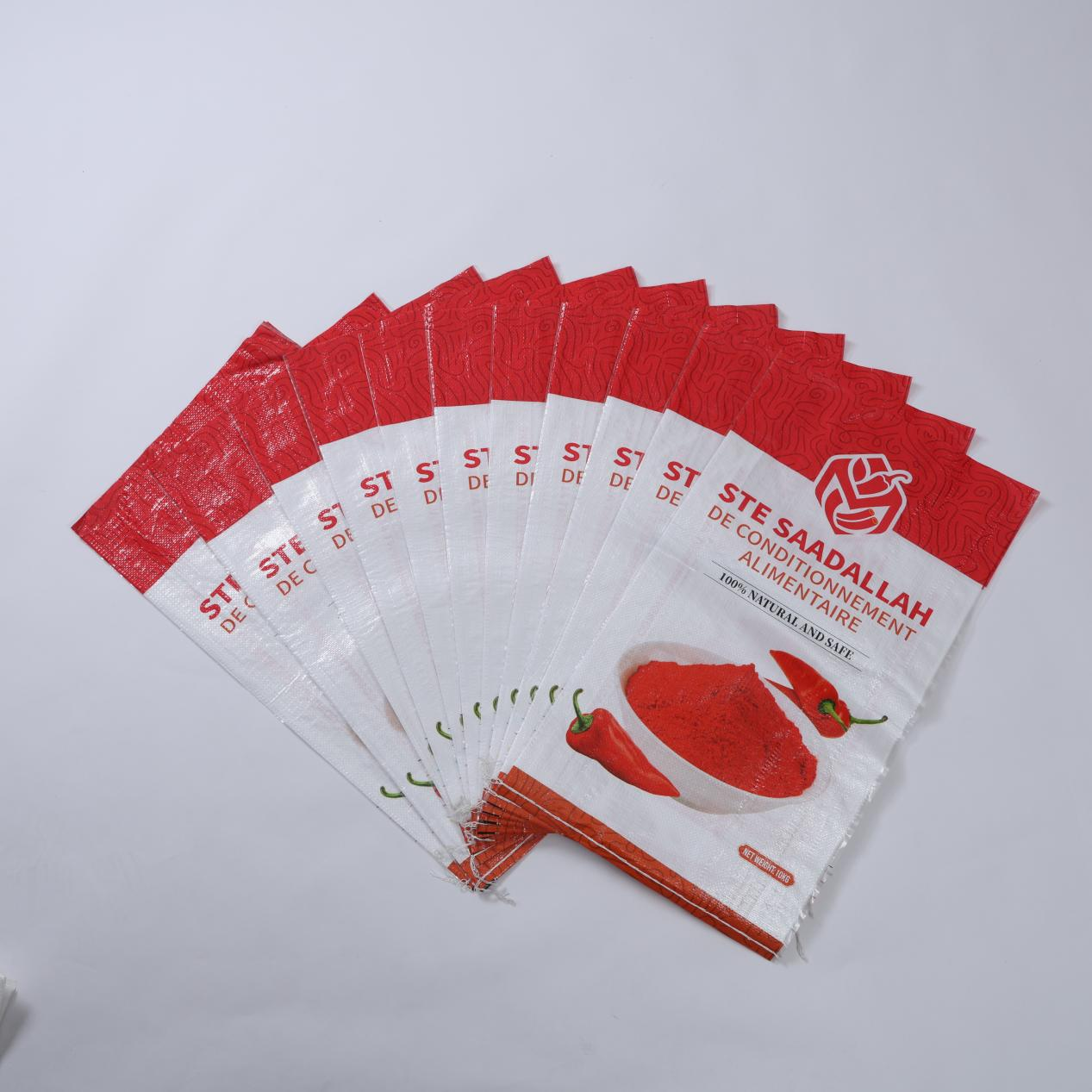
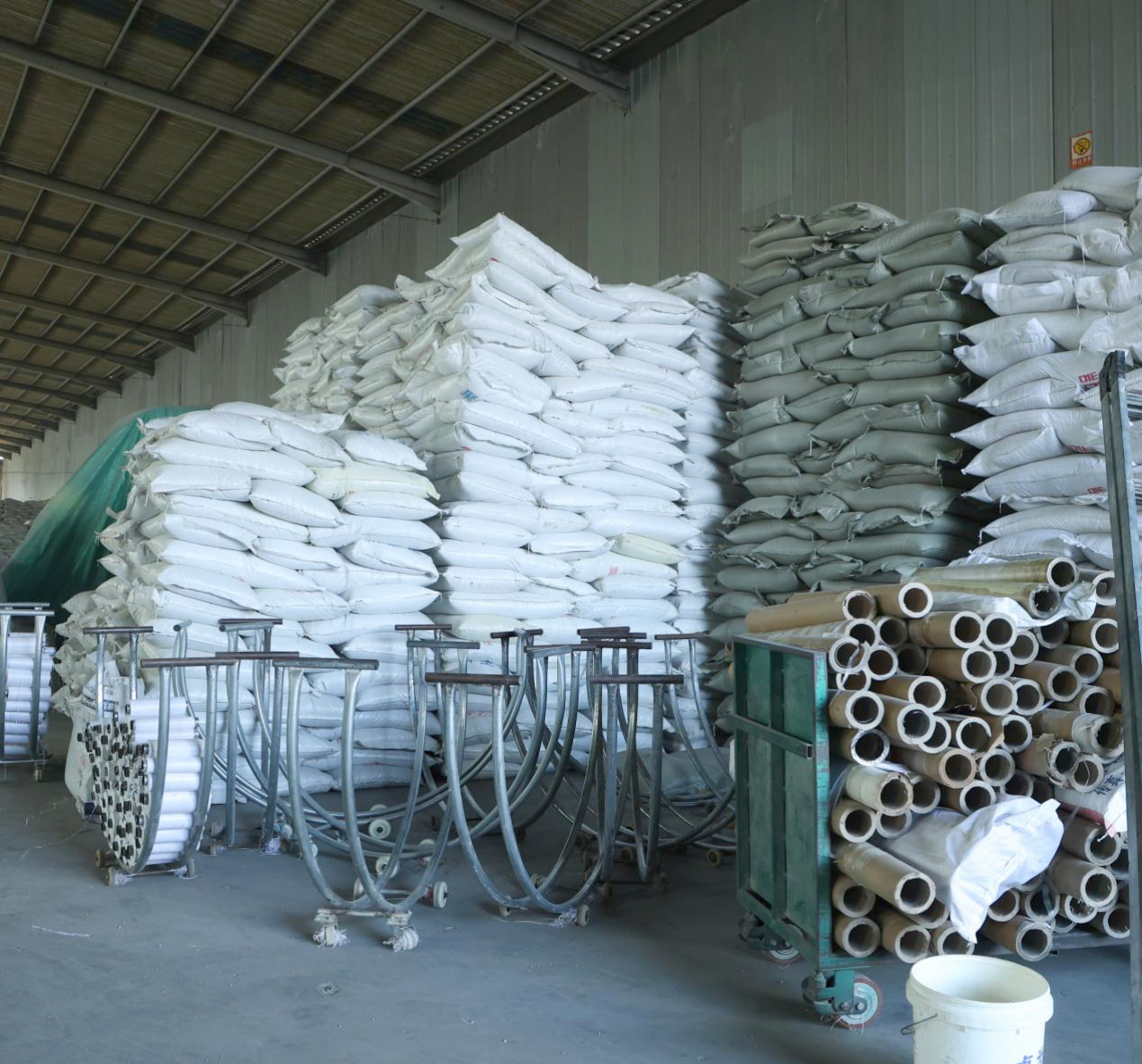
Factory equipped with fully automatic tape extruders, high-speed circular looms, CNC cutting machines, and other complete advanced equipment, achieving full-process automation and precision production from tape extrusion and weaving to cutting and sewing. Products cover a wide range of specifications, including PP woven bags, laminated bags, and FIBC bulk bags, with strict control over dimensions, grammge, and printing accuracy to ensure consistent, stable output in every batch.
Raw Material and Tape Extrusion:Premium polypropylene granules are selected as the base material, sourced from certified suppliers with verified purity and melt flow indices optimized for woven bag production. The granules are mixed with precisely measured proportions of calcium carbonate filler and UV stabilizers according to each product specification, ensuring that weather resistance and tensile properties are engineered into the material from the very first step.Fully automatic tape extruders feed the blended compound into heated barrels, where controlled screw rotation melts and homogenizes the material at temperatures calibrated to within a narrow tolerance window. The molten PP is extruded through a flat die into a water quenching bath, where rapid cooling locks in the molecular orientation essential for subsequent stretching. Following quenching, the flat tapes pass through a series of heated stretching rollers. The draw ratio — the degree to which each tape is elongated — is carefully monitored and adjusted to achieve the target balance of tensile strength and elongation at break. A final annealing stage relieves internal stresses, producing flat tapes with uniform thickness, consistent tensile strength across the full reel length, and minimal variation from edge to center. Each reel undergoes inline thickness gauging, and any deviation beyond acceptable limits triggers an automatic alert for operator intervention.
Weaving and forming: The stretched flat tapes are wound onto warp beams and loaded into high-speed circular looms, where they are interlaced with weft tapes to form a continuous tubular fabric. These looms operate at high revolution speeds while maintaining stable shuttle movement, thanks to precision-engineered cam drives and automatic warp tension compensation systems. Uniform tension across all warp ends is critical — any imbalance would manifest as wavy edges, loose weave bands, or structural weak points in the finished fabric.The weaving density, expressed in picks per inch or per decimeter, is configured at the loom controller based on the target bag specification. For standard-duty bags, a balanced warp-weft density delivers optimal cost-to-strength performance. For heavy-duty or FIBC-grade applications, the density is increased significantly, with additional reinforcement tapes integrated along the fabric length at defined intervals. The resulting tubular fabric features tight, uniform weave patterns with a smooth surface finish, free from common defects such as missing picks, broken warps, or irregular selvages. Quality inspectors perform periodic fabric sampling at each loom station, verifying weave density with a pick glass and checking fabric weight against production standards.
Cutting and sewing: The woven tubular fabric proceeds to CNC cutting stations, where preset programs control cutting length, cutting angle, and batch quantity. The CNC system stores cutting parameters for each product code, allowing operators to switch between bag sizes with minimal changeover time and no risk of manual measurement errors. Precision servo-driven blades ensure clean, burr-free cuts that facilitate downstream sewing operations.For standard open-mouth bags, the cut fabric pieces are fed into automatic bottom-sewing lines. These lines fold the bag bottom to a consistent hem depth, then apply double-stitch chain-stitch or lock-stitch patterns with precisely regulated stitch density and thread tension. The double-stitch configuration provides the redundancy essential for heavy-load applications — even if one stitch line is compromised, the second maintains structural integrity. For valve bags, an automatic valve-forming station pre-folds and stitches the valve opening before the bag body is sealed.FIBC bulk bags undergo additional processing steps. Lifting loops made from high-tenacity PP or polyester webbing are cut to length and sewn into the bag body at reinforced attachment points, with each loop capable of bearing its proportional share of the safe working load. Optional features such as document pouches, discharge spouts, filling skirts, and baffles are integrated at designated workstations along the sewing line.
Quality Control and Final Inspection:Quality control is embedded throughout the production chain rather than being confined to a final inspection gate. Inline checkpoints monitor key parameters at each stage: tape thickness and tensile strength after extrusion, fabric weight and weave density after looming, and stitch integrity after sewing.Finished bags undergo batch-level destructive and non-destructive testing. Drop tests simulate handling impacts by filling sample bags to their rated capacity and subjecting them to repeated vertical drops. Stacking compression tests verify that filled bags can withstand the sustained pressure of warehouse and container stacking without deformation or rupture. UV aging tests, conducted in accelerated weathering chambers, confirm that outdoor-storable bags retain their mechanical properties over the intended service life. For food-grade products, migration testing according to relevant international standards verifies the absence of harmful substance transfer into packaged contents.Every batch is accompanied by a traceable production record linking raw material lot numbers, machine parameters, and inspection results, ensuring that any variance can be investigated and corrected at its root cause.

 EN