 EN
How to Assess Production Efficiency at a PP Woven Bag Factory
Discover the 4 critical production metrics—throughput, defect rate, equipment uptime & on-time delivery—to vet factories confidently.

2026/08/04

Understanding the core mechanics of extrusion and tape drawing technology is essential for anyone involved in PP woven bag factory operations. These two complementary processes form the backbone of modern woven bag production line systems, transforming raw polypropylene resin into the high-performance fabric used in custom woven bag factory applications across industrial, agricultural, and commercial sectors. The technical synergy between extrusion and tape drawing determines the final quality, strength, and cost efficiency of the finished product.
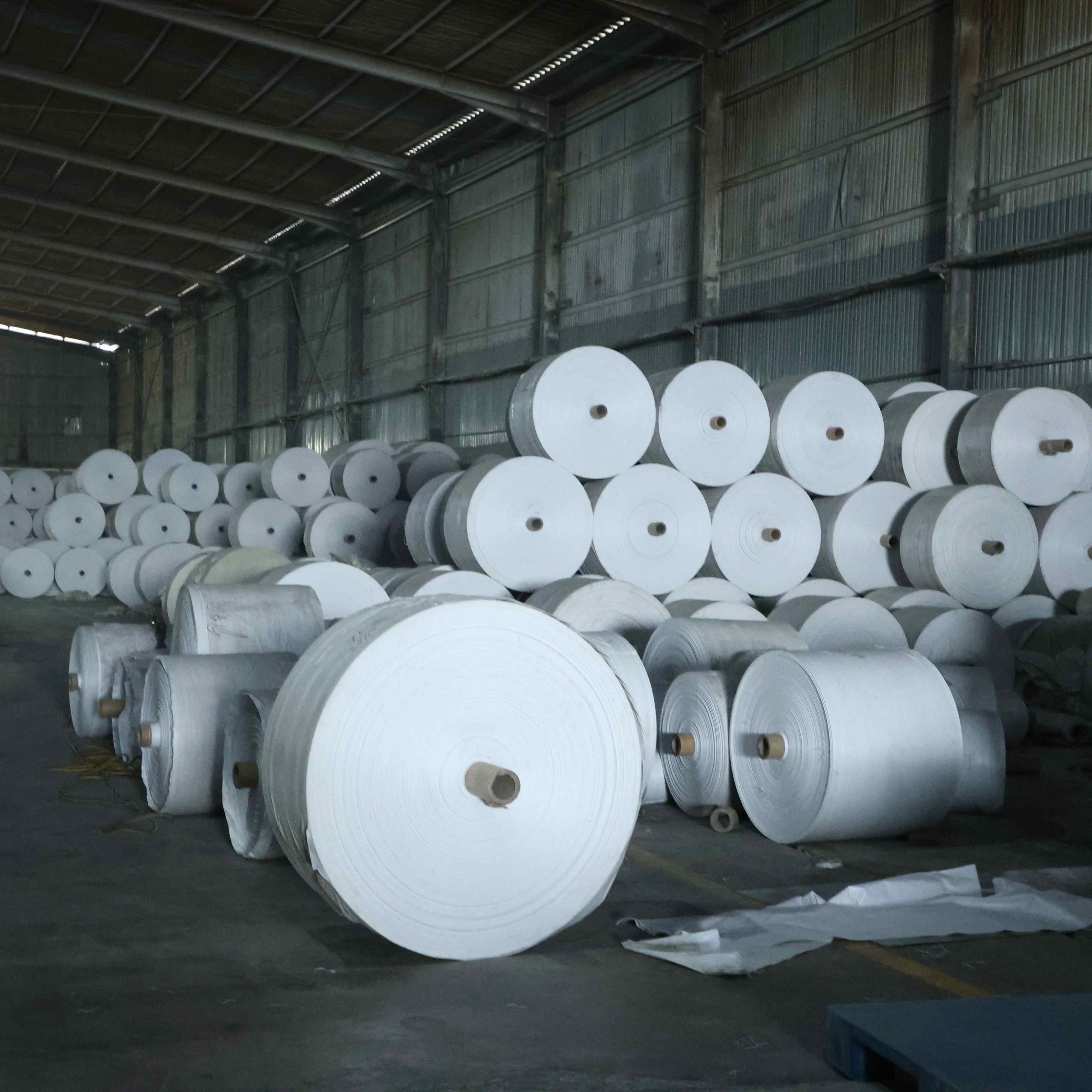
A functioning PP bag manufacturing operation requires precise control over temperature, pressure, and molecular orientation during both extrusion and subsequent tape drawing phases. When these processes work in harmony, a bulk bag manufacturing facility can achieve superior tensile strength, consistent width tolerances, and optimal weaving characteristics. The relationship between these two stages directly influences production speed, material yield, and the ultimate performance of woven bags in demanding field conditions.
Extrusion is the first critical phase in any woven bag production line. Raw polypropylene pellets are fed into a heated barrel where they melt and are forced through a specially designed die under controlled pressure. The die opening determines the initial strand diameter and flat tape configuration. Temperature management during extrusion is paramount, as overheating degrades the polymer chains while insufficient heat prevents proper flow and consolidation. In a PP bag manufacturing setup, extrusion speed must balance material throughput with molecular consistency, ensuring that every meter of extruded tape meets strength and transparency specifications.
The choice of polypropylene grade directly impacts extrusion performance in custom woven bag factory environments. Virgin polypropylene with high melt flow index allows faster production rates, while stabilized blends incorporating UV inhibitors and antioxidants extend product lifespan in outdoor applications. Die design in a bulk bag manufacturing facility must account for polymer viscosity, cooling requirements, and the desired final tape profile. A well-engineered die produces uniform strands with minimal surface defects, laying the foundation for successful tape drawing and weaving in subsequent stages.
Tape drawing is the transformative process that converts extruded polypropylene strands into oriented, high-strength tapes. In a woven bag production line, freshly extruded tape passes through heated rollers that progressively stretch the material, typically at a draw ratio between 5 and 9 times the original diameter. This mechanical stretching aligns polymer chains in the longitudinal direction, dramatically improving tensile strength, modulus, and dimensional stability. The tape drawing technology in a PP woven bag factory operates as a controlled heating and stretching stage that fundamentally improves the mechanical properties compared to non-oriented film or tape, making it ideal for structural applications requiring high load-bearing capacity.
Effective tape drawing in PP bag manufacturing requires synchronized control of draw temperature, roller speed ratios, and tension management. If draw temperature is too low, the polymer remains brittle and resists proper orientation. If temperature exceeds optimal limits, the tape becomes sticky or prone to breaking. Draw ratio must be carefully calibrated; excessive drawing creates weak spots, while insufficient drawing leaves residual stress in the material. A custom woven bag factory employs real-time monitoring systems that track tape width, thickness, and tensile properties to ensure each batch meets specifications. This precision translates into consistent performance when these tapes are woven into finished bags at the bulk bag manufacturing facility.
After extrusion and tape drawing complete their roles, the oriented polypropylene tapes are wound onto spools and fed into weaving looms that form the crossover pattern characteristic of woven bags. The quality of prior extrusion and tape drawing directly determines weaving efficiency and final bag properties. Oriented tapes feed more smoothly through loom mechanisms, reduce yarn breakage, and produce tighter, more uniform weaves. In a PP woven bag factory, the coordination between tape drawing equipment and weaving stations ensures minimal downtime and maximum throughput. The strength gained during tape drawing translates into finished bags that can safely contain and transport heavy materials without rupture or deformation.
The efficiency gains from optimized extrusion and tape drawing in a woven bag production line directly impact production economics in bulk bag manufacturing environments. Proper tape drawing reduces material waste by improving orientation uniformity and minimizing defect-induced bag rejections. Oriented tapes require less material per linear meter to achieve the same load-bearing capacity as non-oriented alternatives, effectively reducing raw material consumption. A custom woven bag factory that invests in advanced extrusion and tape drawing systems achieves faster production cycles, lower per-unit material costs, and superior product consistency. These operational advantages compound over large production volumes, making investment in reliable extrusion and tape drawing technology a sound strategic decision for PP bag manufacturing facilities serving price-sensitive and performance-demanding markets.
Extrusion melts raw polypropylene pellets and forms them into continuous strands through a die opening, while tape drawing is a subsequent stretching and heating process that orients those strands to dramatically increase their strength and dimensional stability. In a woven bag production line, extrusion creates the basic material form, and tape drawing optimizes its structural properties before weaving. Both processes are essential in a PP woven bag factory for achieving the high-performance characteristics demanded in industrial and commercial bulk bag manufacturing applications.
Tape drawing aligns the polymer chains of polypropylene in the longitudinal direction through controlled mechanical stretching, typically at draw ratios between 5 and 9 times. This molecular alignment significantly increases tensile strength, elastic modulus, and load-bearing capacity compared to non-oriented tape. In a custom woven bag factory, oriented tapes woven together create bags capable of safely supporting far heavier loads than non-oriented alternatives, making tape drawing technology fundamental to the woven bag production line's ability to meet rigorous performance specifications in bulk bag manufacturing.
A PP bag manufacturing facility must monitor extrusion temperature, barrel pressure, and material flow consistency to ensure uniform strand properties. During tape drawing, critical parameters include draw temperature, roller speed ratios, tape tension, and draw ratio uniformity. Real-time measurement of tape width, thickness, and tensile strength confirms that each batch meets specifications before reaching the weaving stage. In a bulk bag manufacturing operation, consistent quality at both extrusion and tape drawing stages prevents defects, reduces waste, and ensures that finished woven bags meet customer performance requirements and certifications demanded by industrial users.

Discover the 4 critical production metrics—throughput, defect rate, equipment uptime & on-time delivery—to vet factories confidently.

Ensure regulatory compliance & worker safety with proven methods for chemical woven bags—material selection, labeling, storage & training.

Discover the full PP woven bag manufacturing workflow—from extrusion & weaving to printing & QC. Boost efficiency, compliance & ROI. Download the process guide now.

Struggling with defects or customer returns? Discover the 5 non-negotiable quality checkpoints across your woven bag production line
Which automation tier is right for your PP woven bag factory? Compare manual to Industry 4.0 systems for cost, quality, and scalability.
Get in touch for details on polypropylene woven bags and flexible packaging solutions.
Tel
Address
No.2015, Liaoyuan Building, Lanshan District, Linyi City, Shandong Province.China

