 EN
How to Assess Production Efficiency at a PP Woven Bag Factory
Discover the 4 critical production metrics—throughput, defect rate, equipment uptime & on-time delivery—to vet factories confidently.

2026/08/26
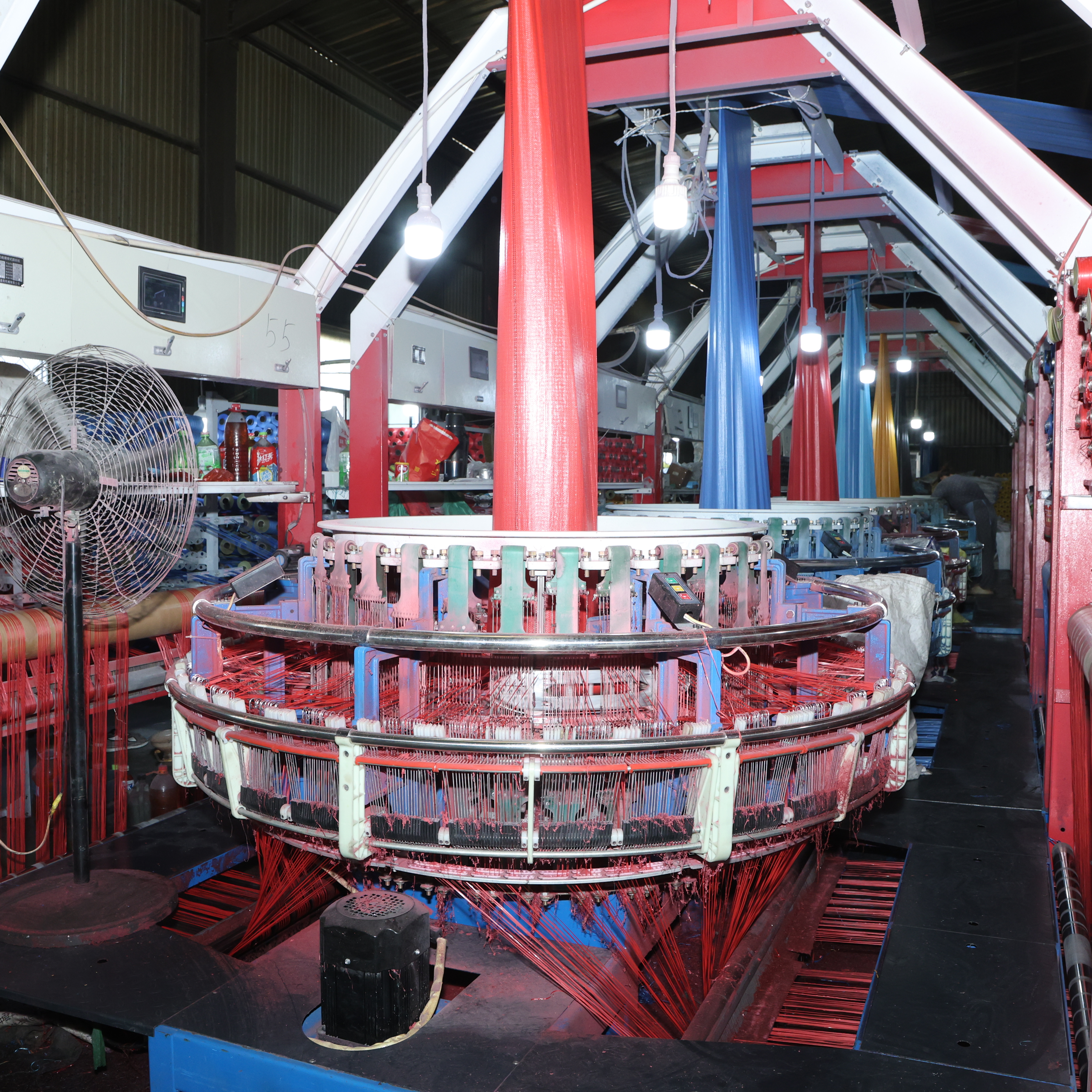
Choosing between a fully integrated and partially outsourced PP woven bag factory fundamentally shapes your supply chain efficiency, production costs, quality consistency, and responsiveness to market demands. This decision impacts not only your immediate procurement strategy but also your long-term competitive positioning in industries relying on reliable bulk bag manufacturing solutions. Understanding the operational, financial, and strategic differences between these two models is essential for any business seeking durable polypropylene packaging bags.
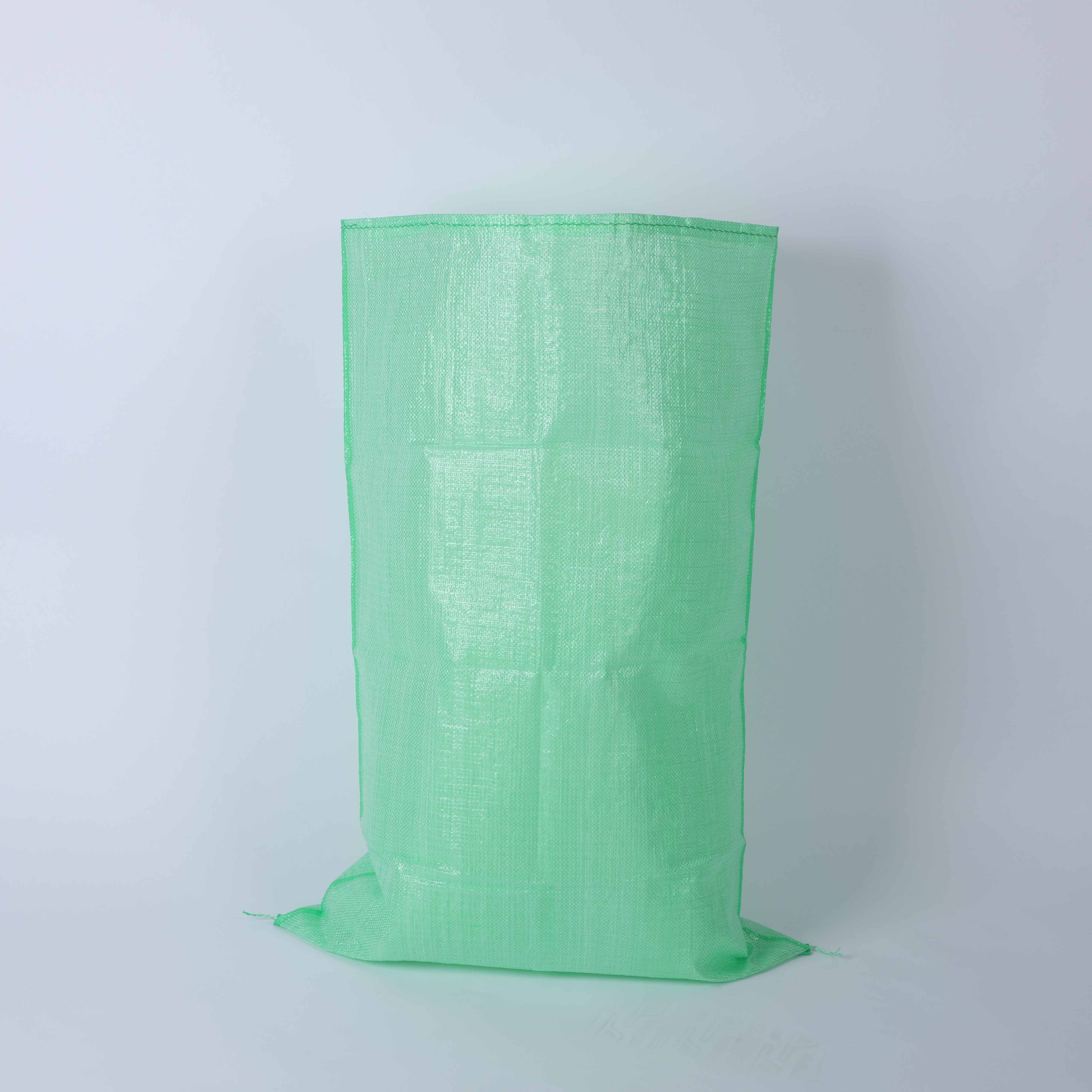
A fully integrated woven bag production line operates as a self-contained ecosystem where a single facility controls every stage, from raw polypropylene material input through final packaging. A partially outsourced custom woven bag factory, conversely, manages core production internally while delegating specialized or labor-intensive processes to external partners. Each approach presents distinct advantages and trade-offs that require careful evaluation based on your business scale, production volume, quality requirements, and strategic priorities.
In a fully integrated setup, your custom woven bag factory operates all machinery, controls raw material flow, manages quality at every checkpoint, and oversees finishing operations under one roof. This vertical integration eliminates handoff delays, reduces transportation between facilities, and ensures consistent quality standards because every process adheres to the same internal protocols. Your pp bag manufacturing team maintains direct oversight of resin selection, extrusion parameters, weaving tension, printing fidelity, and final inspection without depending on external suppliers' timelines or quality commitments.
Fully integrated bulk bag manufacturing typically requires substantial capital investment in diverse equipment: extruders, weaving looms, printing units, cutting systems, and testing laboratories. The operational complexity increases significantly, as the facility must employ specialists across multiple production domains. However, this complexity translates into unprecedented control over production scheduling, quality assurance, and the ability to pivot rapidly when market demands shift or custom specifications require real-time adjustments.
A partially outsourced woven bag production line maintains core operations in-house while partnering with external specialists for tasks like raw material processing, specialized coating, printing, or logistics. This hybrid model allows your pp bag manufacturing facility to focus capital and expertise on your competitive advantage areas while leveraging external partners' economies of scale for commoditized processes. For instance, a custom woven bag factory might handle weaving and basic finishing internally but outsource high-volume resin procurement or advanced coating applications.
Partially outsourced bulk bag manufacturing reduces operational complexity and fixed overhead costs because you avoid investing in equipment you use sporadically. This model provides flexibility to scale production by adjusting partner capacity without expanding your facility footprint. However, coordination challenges emerge as you manage multiple external timelines, quality standards, and communication protocols, potentially introducing variability into your final product quality.
A fully integrated PP woven bag factory demands substantial upfront investment in equipment, facility space, environmental controls, and quality assurance infrastructure. Operating expenses remain relatively fixed because you maintain in-house staff, equipment maintenance, and utilities across all production stages. This structure favors high-volume production where fixed costs distribute across large output quantities, yielding lower per-unit costs at scale. Conversely, underutilized equipment during low-demand periods increases unit costs significantly, making capacity planning critical.
Partially outsourced woven bag production line operations require lower initial capital because you invest primarily in core processing equipment rather than a complete production ecosystem. Operating expenses become more variable because you pay outsourcing partners based on actual volume rather than maintaining fixed capacity. This approach suits businesses with fluctuating demand, seasonal patterns, or businesses launching new products where demand forecasting remains uncertain. Your custom woven bag factory benefits from lower financial risk during market downturns because you scale external partner usage proportionally to actual sales.
At very high volumes, fully integrated pp bag manufacturing typically achieves the lowest per-unit costs because fixed overhead distributes widely and you eliminate intermediary markups. Break-even analysis for integrated facilities typically occurs at 500,000 to 1,000,000 units annually, depending on product complexity and equipment efficiency. Below this threshold, per-unit costs often exceed those from partially outsourced alternatives because fixed costs remain unchanged while volume fails to absorb them.
Partially outsourced bulk bag manufacturing maintains competitive unit economics across a wider volume range because variable costs scale more predictably with production. A custom woven bag factory using this model can remain profitable at volumes as low as 100,000 to 300,000 units annually because external partners absorb some fixed-cost burden. However, at extremely high volumes exceeding 2,000,000 units annually, the outsourced model's inherent markups create a cost disadvantage compared to a fully integrated facility.
A fully integrated woven bag production line maintains centralized quality protocols, enabling real-time monitoring across all production stages using standardized testing equipment and trained personnel. Quality issues detected at any checkpoint feed immediately into corrective actions before defective material progresses downstream. Your PP woven bag factory achieves high consistency because every operator follows identical procedures, equipment calibration remains synchronized, and raw material sourcing stays concentrated with your approved suppliers. This control translates into superior product uniformity, reduced waste, and predictable failure rates.
Partially outsourced pp bag manufacturing introduces multiple quality interfaces where external partners' standards must align with your internal protocols. Contractual quality specifications and regular audits manage consistency, but inherent variability emerges from different equipment, operators, and facilities. A custom woven bag factory using this model must invest in comprehensive incoming inspection protocols and third-party testing to verify external components meet specifications. While additional quality oversight adds costs, many businesses find this acceptable given the flexibility and capital savings outsourcing provides.
Fully integrated bulk bag manufacturing environments excel at rapid prototyping and custom specifications because your internal teams control every variable. Modifying weave patterns, material blends, thickness, printing designs, or specialty coatings requires only internal coordination rather than negotiating changes with multiple external partners. Your woven bag production line can quickly accommodate one-off orders or experimental production runs without disrupting standard workflows or negotiating premium fees with reluctant external suppliers. This responsiveness creates competitive advantage when serving customers demanding unique solutions or short product development cycles.
Partially outsourced custom woven bag factories face longer timelines and higher costs for non-standard requests because external partners must modify their established processes. However, this model still accommodates most customization requests through partner collaboration, provided volumes justify the deviation from standard production. A partially outsourced PP woven bag factory remains attractive for businesses serving diverse customer niches willing to accept longer lead times for specialized products.
Fully integrated woven bag production line facilities typically achieve lower per-unit costs than partially outsourced alternatives when annual volumes exceed approximately 800,000 to 1,200,000 units, depending on product complexity and market conditions. Below this threshold, the fixed overhead of a fully integrated pp bag manufacturing facility usually makes per-unit costs higher than a partially outsourced custom woven bag factory. Conduct detailed financial modeling using your specific equipment costs, labor rates, and production efficiency to determine the exact break-even point for your bulk bag manufacturing operation.
Fully integrated PP woven bag factories typically achieve higher quality consistency because all processes occur under centralized control with standardized procedures, synchronized equipment calibration, and immediate corrective feedback loops. Partially outsourced woven bag production lines maintain acceptable quality through contractual specifications and third-party auditing, but inherent variability emerges from managing multiple external partners' standards. A well-managed custom woven bag factory using either approach can meet industry specifications, but fully integrated operations generally demonstrate lower defect rates and tighter tolerances.
Fully integrated woven bag production line operations respond fastest to customization requests because internal teams control all variables and can modify processes immediately without external coordination. A fully integrated custom woven bag factory can prototype new designs and execute one-off orders efficiently within standard timelines. Partially outsourced pp bag manufacturing requires negotiating changes with external partners and typically extends lead times and costs for non-standard requests, making this model less suitable for businesses requiring frequent customization or rapid product innovation cycles.

Discover the 4 critical production metrics—throughput, defect rate, equipment uptime & on-time delivery—to vet factories confidently.

Ensure regulatory compliance & worker safety with proven methods for chemical woven bags—material selection, labeling, storage & training.

Discover the full PP woven bag manufacturing workflow—from extrusion & weaving to printing & QC. Boost efficiency, compliance & ROI. Download the process guide now.

Struggling with weak bags or high material waste? Master extrusion and tape drawing tech for stronger, cheaper PP woven bags. Optimize your production line now.

Struggling with defects or customer returns? Discover the 5 non-negotiable quality checkpoints across your woven bag production line
Which automation tier is right for your PP woven bag factory? Compare manual to Industry 4.0 systems for cost, quality, and scalability.
Get in touch for details on polypropylene woven bags and flexible packaging solutions.
Tel
Address
No.2015, Liaoyuan Building, Lanshan District, Linyi City, Shandong Province.China

