 EN
How to Assess Production Efficiency at a PP Woven Bag Factory
Discover the 4 critical production metrics—throughput, defect rate, equipment uptime & on-time delivery—to vet factories confidently.

2026/08/05
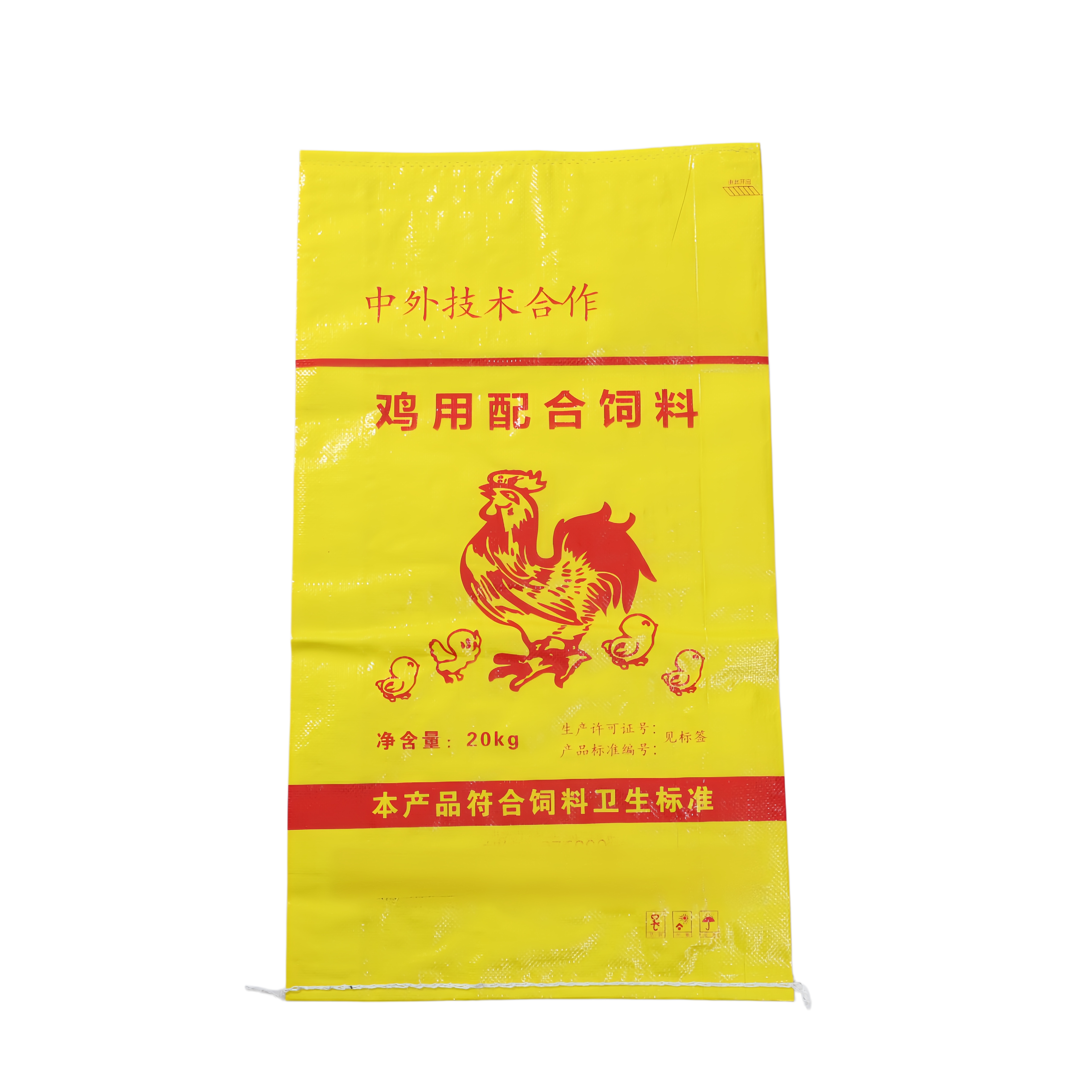
Communicating your specifications for custom woven bags requires precision, clarity, and a structured approach to ensure manufacturers understand exactly what you need. Whether you're sourcing packaging for retail products, agricultural goods, or industrial materials, the quality of your communication directly impacts the final product's success. Many procurement teams struggle with miscommunication, leading to costly revisions, production delays, and dissatisfaction with custom printed woven bag designs that don't meet expectations. This guide walks you through practical strategies to articulate your requirements so that your supplier delivers exactly what you envision.
Before engaging with a manufacturer, you must understand the technical landscape of woven bag production. Custom woven bags come in various styles, materials, and configurations, each suited to different applications. Understanding these variables helps you communicate more effectively and avoid ambiguity. Whether you're ordering a personalized pp bag for branding purposes or a tailored woven sack for heavy-duty storage, your specifications must be documented clearly to prevent misunderstandings that could derail production timelines.
The material of your custom woven bags fundamentally determines performance, durability, and cost. Polypropylene remains the most common choice for custom printed woven bag production due to its strength, moisture resistance, and affordability. You should specify the exact resin type, yarn denier, and fabric weight in grams per square meter. For example, a personalized pp bag intended for flour storage requires different specifications than one designed for lightweight promotional items. Communicate whether you need virgin or recycled polypropylene, as this affects both price and environmental credentials. Include precise specifications like 'fifty-five to sixty grams per square meter, twelve by twenty denier yarn, with virgin resin' to eliminate guesswork.
Dimensions drive production setup and directly impact your custom packaging solution's functionality. Provide measurements in both metric and imperial units, specifying width, height, and gusset depth. A tailored woven sack used for seed storage requires different dimensions than one designed for retail display. State whether dimensions are flat or inflated measurements, as this distinction affects final bag size. Include specifications for the valve opening if bottom discharge is needed, the number of ply layers if extra strength is required, and any reinforcement requirements for heavy products. Furnish a technical drawing whenever possible, annotating every dimension with tolerances of plus or minus acceptable variations.
For custom printed woven bag orders, design clarity prevents production errors and ensures brand consistency. Provide high-resolution artwork files in CMYK color mode, along with a detailed color specification guide using Pantone or similar standards. Explain the exact location of logos, text, and decorative elements on your personalized pp bag. State the number of print colors, whether flexography or rotogravure printing is preferred, and any special finishing requirements like varnish coating. Include information about print registration tolerances and acceptable color variation ranges. If your custom packaging solution features multiple design elements, clarify which ones are essential and which are secondary, helping the manufacturer prioritize quality on the most visible components.
The closure mechanism of your tailored woven sack affects both functionality and user experience. Describe whether you need an open mouth bag, one with heat-sealed closure, or a drawstring option. For custom woven bags used in food or pharmaceutical applications, specify whether food-grade adhesives or coatings are required. If your custom printed woven bag requires a valve for controlled dispensing, provide technical drawings showing valve placement, size, and opening mechanism. Communicate any special features like resealable closures, tamper-evident seals, or moisture barriers that your custom packaging solution must incorporate. Include information about handle placement and reinforcement if customers will carry bags after purchase.
Quality expectations for custom woven bags must be measurable and explicitly stated to avoid disputes. Specify required tensile strength values for seams and fabric, burst resistance ratings, and tear strength parameters according to relevant testing standards like ASTM or ISO protocols. For a personalized pp bag designed for outdoor storage, communicate requirements for UV resistance and weathering stability. State whether your custom packaging solution must withstand specific temperature ranges, moisture levels, or mechanical stress during handling and transport. Define acceptance criteria for defects, such as the maximum number of pin holes or print imperfections per thousand bags. Require that manufacturers provide test certificates validating compliance with stated specifications before final delivery.
Before full production of your custom printed woven bag order, always request production samples for approval. This step catches potential issues early when corrections are still cost-effective. Specify the number of samples needed, whether they should be produced using the exact production machinery and materials planned for bulk orders, and the timeline for sample submission and feedback. Request documentation including material certifications, test reports, weight measurements, and dimension verification for your tailored woven sack samples. Ask for production specifications and recipes so you understand exactly how the custom woven bags will be manufactured. This transparency builds confidence and creates a reference standard against which bulk production can be compared.
Your specification document should include material type and weight, exact dimensions with tolerances, design files with color standards, closure mechanisms, printing requirements, quality standards, and required certifications. Include technical drawings, sample references, and any relevant industry standards your custom packaging solution must meet. Provide contact information for design approvals and a timeline for samples and production delivery.
Provide high-resolution artwork files in the correct color mode and include a color reference guide using Pantone standards. Request a custom printed woven bag sample before bulk production and compare it directly to your approved artwork. Communicate acceptable variation ranges for colors and print registration, and ask the manufacturer to document their printing setup to ensure consistency across production runs.
Request material certifications confirming resin type and food-grade status if applicable. Specify tensile strength, burst resistance, and tear strength testing according to ASTM or ISO standards. Ask for test certificates from independent laboratories validating that your custom woven bags meet stated specifications before accepting final delivery.

Discover the 4 critical production metrics—throughput, defect rate, equipment uptime & on-time delivery—to vet factories confidently.

Ensure regulatory compliance & worker safety with proven methods for chemical woven bags—material selection, labeling, storage & training.

Discover the full PP woven bag manufacturing workflow—from extrusion & weaving to printing & QC. Boost efficiency, compliance & ROI. Download the process guide now.

Struggling with weak bags or high material waste? Master extrusion and tape drawing tech for stronger, cheaper PP woven bags. Optimize your production line now.

Struggling with defects or customer returns? Discover the 5 non-negotiable quality checkpoints across your woven bag production line
Which automation tier is right for your PP woven bag factory? Compare manual to Industry 4.0 systems for cost, quality, and scalability.
Get in touch for details on polypropylene woven bags and flexible packaging solutions.
Tel
Address
No.2015, Liaoyuan Building, Lanshan District, Linyi City, Shandong Province.China

