 EN
How to Assess Production Efficiency at a PP Woven Bag Factory
Discover the 4 critical production metrics—throughput, defect rate, equipment uptime & on-time delivery—to vet factories confidently.

2026/09/01

Scaling agricultural operations requires careful attention to packaging efficiency and cost management. For businesses handling large volumes of grain, the expense associated with rice packaging represents a significant line item in operational budgets. Strategic decisions about materials, suppliers, and sourcing methods directly impact profitability without compromising product protection or market presentation. Understanding the levers available to reduce rice bag costs while maintaining quality is essential for any grain distributor, miller, or agricultural exporter operating at volume.
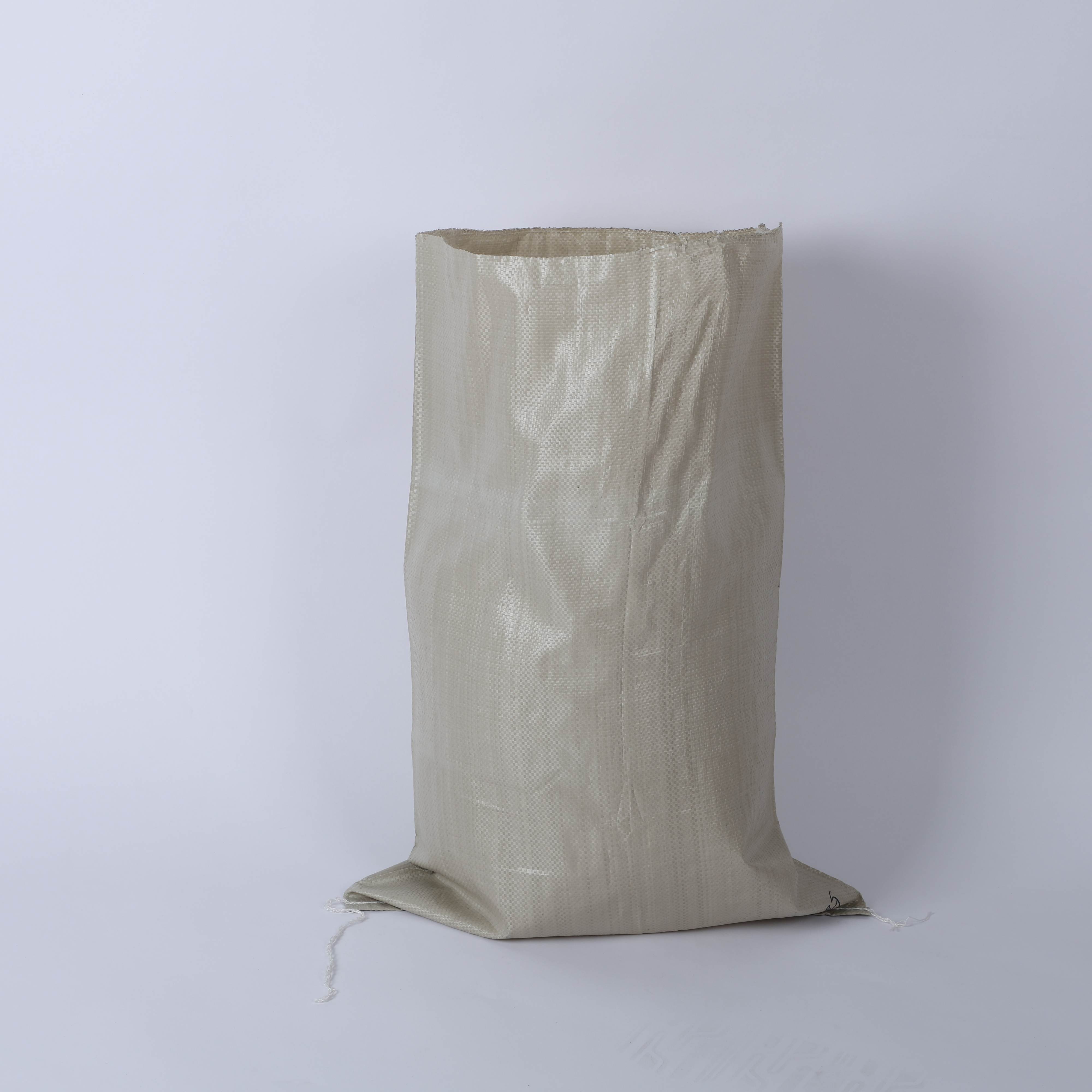
This guide explores actionable tactics for optimizing your rice packaging bag procurement strategy. From material selection to order consolidation and supplier negotiation, we cover the practical approaches that allow agricultural businesses to achieve meaningful cost reductions across their grain storage bag requirements.
The foundation of cost efficiency begins with material choice. Rice bag manufacturers offer multiple material grades, and understanding the performance-to-cost ratio is critical. Polypropylene woven fabrics dominate the market because they balance durability, moisture resistance, and affordability. When sourcing rice packaging bag materials, evaluate whether premium grades are genuinely necessary for your specific application or whether mid-range options deliver adequate performance at lower cost.
PP rice sack construction varies in fabric weight, yarn count, and lamination quality. Heavier fabrics provide superior puncture resistance but increase material costs. For short-distribution channels or controlled storage environments, a lighter-weight pp rice sack may perform adequately while reducing expenses. Work with suppliers to assess historical damage rates and storage conditions, then specify material grades that match actual risk profiles rather than over-specifying performance.
Standardization drives economies of scale in grain storage bag manufacturing. Rather than ordering multiple custom sizes, consolidating your needs into a single standard dimension significantly reduces per-unit production costs. When manufacturers run extended production cycles on identical grain storage bag specifications, they achieve optimal machine efficiency, waste minimization, and pricing leverage. Communicate with your logistics and sales teams to identify one or two core rice packaging bag sizes that cover at least 80 percent of your volume requirements.
Custom printing and branding also influence costs. While brand differentiation matters, complex multi-color designs or specialized finishes increase manufacturing complexity. Consider whether simpler label designs or single-color imprints reduce costs without materially impacting market perception. Some agricultural businesses find that strategic branding on a limited number of premium bags paired with basic-specification bulk bags optimizes both cost and market positioning.
Bulk purchasing is one of the most direct levers for rice bag cost reduction. Suppliers offer tiered pricing based on order volumes, and consolidating seasonal or quarterly needs into single larger orders typically unlocks meaningful per-unit discounts. Forecast your annual grain storage bag requirements by analyzing historical volume patterns and projected demand growth. Present annual or semi-annual volume commitments to suppliers during negotiations—this certainty allows manufacturers to plan production schedules more efficiently and pass savings downstream.
Beyond raw order size, evaluate whether you can negotiate minimum order quantities that align with your actual purchasing power. Some suppliers offer volume breaks at 50,000, 100,000, or 500,000 unit thresholds. Understanding these price tiers helps you decide whether reaching the next volume bracket justifies strategic inventory investment. Calculate holding costs against bulk discount savings to determine the optimal order quantity that balances cash flow and cost per rice woven bag.
Supplier relationships often provide negotiation benefits beyond published price lists. Suppliers who view your business as long-term partners are frequently willing to offer volume discounts, payment term flexibility, or priority access to cost-saving opportunities. Transparency about your procurement timeline, growth trajectory, and competitive constraints creates space for collaborative problem-solving. Provide clear forecasts and consistent ordering patterns, which reduce supplier uncertainty and allow them to optimize pp rice sack production planning around your expected demand.
When negotiating with suppliers, discuss potential price reductions in exchange for longer commitment periods or payment guarantees. Some manufacturers offer mid-contract price adjustments if raw material costs decline. Building this flexibility into supply agreements ensures that your business captures benefits if market conditions improve while maintaining supplier margins and relationship stability.
Internal operational efficiency directly impacts the effective cost of rice packaging materials. Excessive bag damage during filling, sealing, or handling represents hidden waste that inflates actual per-unit costs. Audit your packaging line for common failure points—misaligned sealing equipment, improper bag tensioning, or abrasive handling during transport. Investing in maintenance and operator training often pays for itself through reduced material waste and rework. When your team fills and seals rice packaging bag products with precision, fewer units are rejected, and your purchasing efficiency improves significantly.
Similarly, evaluate your grain storage bag handling procedures in warehouses and during loading. Implement clear procedures for stacking and transport that minimize punctures or tears. When less finished product requires replacement due to packaging failure, your overall rice woven bag cost per saleable unit declines. This operational discipline multiplies across thousands or millions of units annually.
Consider whether alternative packaging approaches align with your market segments. Bulk sales to institutional buyers may accept different pp rice sack specifications than retail-oriented channels. Offering customers the option to purchase grain in bulk with minimal branding or packaging reduces costs for certain buyer profiles. Some operations find that developing a tiered product offering—premium branded rice packaging bag for retail channels and economical bulk packaging for commodity sales—allows cost optimization by channel while maintaining market flexibility.
Logistics consolidation also reduces per-unit packaging costs. If you manage multiple distribution points or operate through resellers, centralizing packaging operations and then distributing finished products often reduces overhead compared to distributed small-batch packaging. This consolidation increases individual rice bag order sizes at your supplier, improving purchasing leverage and reducing administrative complexity.
Material grade, order volume, and specification standardization are the primary cost drivers. PP rice sack manufacturing costs scale with raw material prices, labor, and production efficiency. Larger orders and standardized dimensions reduce per-unit manufacturing overhead. Custom printing, lamination treatments, and unusual sizes increase costs. Supply chain geography and transportation distance also affect pricing, as logistics costs are embedded in supplier quotes for rice woven bag products.
Focus on matching material specifications to actual performance requirements rather than over-specifying. Consolidate order volumes to unlock bulk pricing, standardize your grain storage bag dimensions to enable longer production runs, and maintain strong supplier relationships. Audit your internal packaging operations to minimize waste from damage or mishandling. Many cost reductions come from operational discipline rather than material compromise, allowing you to preserve product protection while improving economics.
Most suppliers offer tiered discounts at volume thresholds of 50,000, 100,000, 250,000, and 500,000 units, though specific breakpoints vary by manufacturer. Starting at 10,000 to 20,000 units, you access meaningful discounts compared to small orders. Consolidating annual requirements into 2–4 large orders typically positions your business to capture volume pricing while avoiding excess inventory. Discuss supplier volume tiers explicitly during negotiations to understand which thresholds justify strategic purchasing decisions for your rice packaging bag needs.

Discover the 4 critical production metrics—throughput, defect rate, equipment uptime & on-time delivery—to vet factories confidently.

Ensure regulatory compliance & worker safety with proven methods for chemical woven bags—material selection, labeling, storage & training.

Discover the full PP woven bag manufacturing workflow—from extrusion & weaving to printing & QC. Boost efficiency, compliance & ROI. Download the process guide now.

Struggling with weak bags or high material waste? Master extrusion and tape drawing tech for stronger, cheaper PP woven bags. Optimize your production line now.

Struggling with defects or customer returns? Discover the 5 non-negotiable quality checkpoints across your woven bag production line
Which automation tier is right for your PP woven bag factory? Compare manual to Industry 4.0 systems for cost, quality, and scalability.
Get in touch for details on polypropylene woven bags and flexible packaging solutions.
Tel
Address
No.2015, Liaoyuan Building, Lanshan District, Linyi City, Shandong Province.China

